
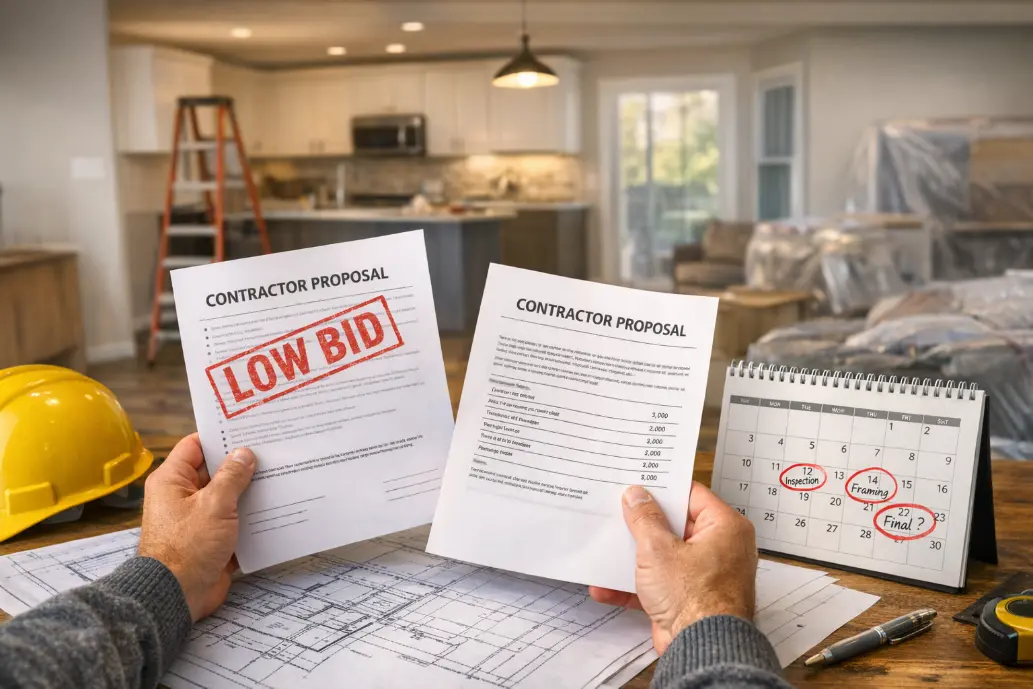
Choosing a contractor in the Bay Area is not about picking the lowest number.
It is about understanding what that number actually includes.
In one of the most regulated construction markets in the country, two proposals for the same project can differ by tens of thousands of dollars — and both may appear reasonable at first glance.
Here’s how to evaluate them like a professional.
Before comparing scope or price, confirm the contractor is properly licensed.
California requires contractors performing work over $500 to hold an active license through the California Contractors State License Board (CSLB):
https://www.cslb.ca.gov/onlineservices/checklicenseII/checklicense.aspx
Also verify:
• License classification (B – General Building Contractor for most remodels)
• Bond status
• Workers’ compensation insurance
If licensing isn’t clean, price doesn’t matter.
For deeper insight on evaluating contractors, see:
How to Choose the Right Contractor for Your New Build or Renovation
Most homeowners compare final numbers.
Professionals compare scope.
Look for:
• Structural work clearly defined
• Electrical panel upgrades included (common in older Bay Area homes)
• Plumbing relocation detailed
• Finish allowances realistic
• Permit fees listed
• Inspection coordination addressed
If scope is vague, the bid is incomplete.
This is one of the main reasons projects drift.
See:
What Actually Causes Construction Projects to Go Sideways
Each Bay Area city operates differently.
Here are direct permit resources homeowners can check:
San José Building Division
https://www.sanjoseca.gov/your-government/departments-offices/planning-building-code-enforcement/building-division
San Francisco Department of Building Inspection
https://sfdbi.org/building-permits
Oakland Building Services
https://www.oaklandca.gov/topics/building-services
Many remodels require:
• Structural review
• Title 24 energy documentation
• Plan check corrections
• Multiple inspections
Title 24 energy compliance is enforced by the California Energy Commission:
https://www.energy.ca.gov/programs-and-topics/programs/building-energy-efficiency-standards
If a proposal does not mention permit sequencing or compliance documentation, you should ask why.
Budget overruns often begin with permit underestimation.
See:
How Do I Stop My Bay Area Remodel from Going Over Budget in 2025?
Allowances are placeholders.
For example:
• $5 per square foot tile allowance
• $400 faucet allowance
• $2,000 appliance placeholder
If your selections exceed these numbers, you pay the difference.
In the Bay Area, finish costs trend higher than national averages due to supply chain and vendor pricing realities.
For perspective on value-based upgrades, review:
Renovations That Bring the Most Value to Your Bay Area Home in 2024
A proposal should outline:
• Estimated start date
• Construction duration
• Inspection pacing
• Milestones
According to the U.S. Census Bureau’s construction data, national construction spending exceeds $2 trillion annually, and labor demand remains high in major metro areas:
https://www.census.gov/construction/c30/
In high-demand regions like the Bay Area, unrealistic scheduling assumptions often signal risk.
If the timeline feels overly aggressive, ask how inspections and material lead times are being handled.
Even strong pricing can fail without structure.
Ask:
• How are changes documented?
• How frequently are updates provided?
• Who is your point of contact?
• How are cost adjustments approved?
Projects rarely collapse because of one mistake. They drift because of informal decisions.
For process clarity, see:
From Concept to Completion: Understanding the Full Home Remodel Process in the Bay Area
Instead of asking, “Why is this cheaper?”
Ask:
“What assumptions are built into this number?”
Price reflects:
• Scope clarity
• Compliance planning
• Risk management
• Communication structure
In regulated regions like California, under-accounting for compliance almost always leads to mid-project adjustments.
In the Bay Area, construction operates under strict licensing, energy, inspection, and labor frameworks.
A lower proposal may simply reflect missing details.
Before signing a contract, compare:
• Scope definition
• Code compliance planning
• Permit sequencing
• Allowances
• Communication systems
If you want a second set of eyes on your proposal before committing, reviewing completed work in the
Arch General Construction Projects Gallery
or starting a conversation through the
Contact Page
can help you move forward with clarity rather than guesswork.

We're here to help you build your future. Whether you're ready to start your project or just have a few questions, our team is ready to assist. Contact us today to schedule a consultation or request more information.
Book a Consultation