
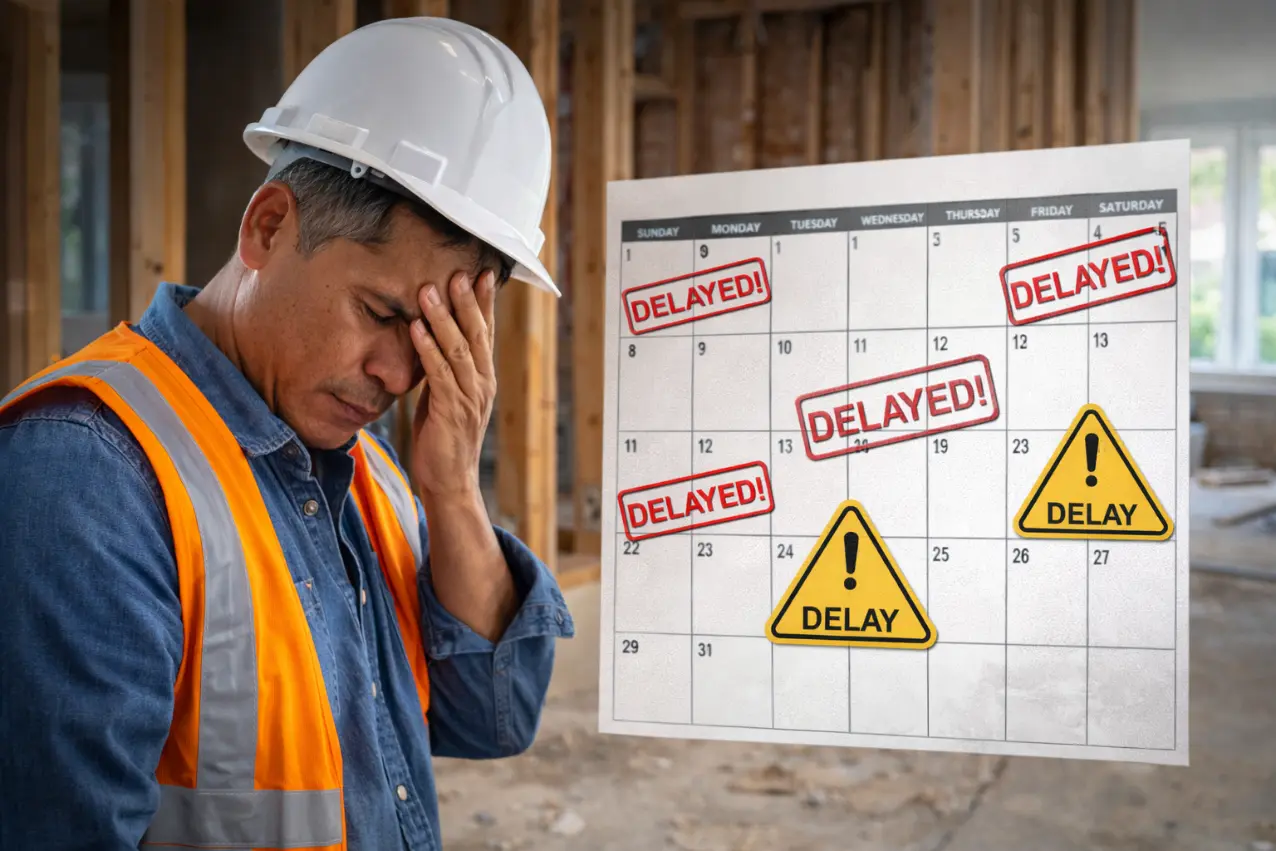
Most construction projects do not fail because of dramatic disasters.
They drift.
Budgets expand. Timelines stretch. Decisions get delayed. Inspections stall progress. And by the time things feel off, the underlying issue has usually been present for weeks.
In the Bay Area, where construction is tightly regulated and labor costs are high, small planning gaps can quickly become expensive.
Here are the real reasons projects go sideways — and how to prevent them.
The most common problem is not bad workmanship.
It is incomplete planning.
When scope is vague, assumptions fill the gaps. That often leads to:
In California, work over $500 legally requires a licensed contractor under the California Contractors State License Board (CSLB)
https://www.cslb.ca.gov/
Clear scope protects both homeowner and contractor. If you're still evaluating teams, review:
How to Choose the Right Contractor for Your New Build or Renovation
Prevention: Define layout, finishes, and systems before demolition begins.
California operates under one of the most rigorous building code systems in the country.
The California Building Standards Commission oversees state building codes:
https://www.dgs.ca.gov/BSC
Energy standards under Title 24 are enforced by the California Energy Commission:
https://www.energy.ca.gov/programs-and-topics/programs/building-energy-efficiency-standards
Title 24 affects:
When these are underestimated or overlooked, projects require mid-course corrections.
For practical context on energy-driven upgrades, see:
High-R Windows vs. Single-Pane Windows: An In-Depth Guide for the SF Bay Area
Prevention: Confirm that energy compliance and inspections are fully accounted for before construction pricing is finalized.
In the Bay Area, permits control the pace of construction.
Each city has its own review and inspection structure:
Inspection sequencing affects:
If inspection timing is underestimated, the schedule shifts — and labor coordination becomes more expensive.
For a broader understanding of how planning protects budgets, see:
How Do I Stop My Bay Area Remodel from Going Over Budget in 2025?
Prevention: Build realistic permit timelines into your schedule from the start.
Many Bay Area homes were built before 1978.
Renovations disturbing painted surfaces may trigger the EPA’s Renovation, Repair and Painting (RRP) Rule:
https://www.epa.gov/lead/lead-renovation-repair-and-painting-program
Failure to comply can cause work stoppages and fines.
Similarly, labor standards enforced by the U.S. Department of Labor influence wage and safety compliance in certain project types:
https://www.dol.gov/
Prevention: Account for regulatory requirements early instead of discovering them mid-project.
Projects rarely fail because of one big mistake. They drift because early numbers were too optimistic.
Common drivers include:
For insight into value-driven upgrades versus cosmetic ones, review:
Renovations That Bring the Most Value to Your Bay Area Home in 2024
Prevention: Build a realistic contingency and define priorities before committing to construction.
Even well-planned projects suffer when communication weakens.
Signs include:
Construction is coordination. Without structured communication, even small issues compound.
For a step-by-step overview of how process clarity protects projects, see:
From Concept to Completion: Understanding the Full Home Remodel Process in the Bay Area
Prevention: Establish update schedules, documented approvals, and defined responsibility before work begins.
In regulated markets like the Bay Area, projects rarely collapse because of incompetence.
They drift because:
Strong pre-construction planning prevents most instability.
Construction in California operates within strict licensing, energy, and inspection systems.
When projects go sideways, it is usually because those systems were not fully accounted for before work began.
Clarity at the beginning protects cost, schedule, and sanity.
If you’re planning a remodel and want to reduce risk before construction starts, reviewing completed work in the
Arch General Construction projects gallery
or starting a structured planning conversation through the
contact page
is often the most efficient way to move forward with confidence.

We're here to help you build your future. Whether you're ready to start your project or just have a few questions, our team is ready to assist. Contact us today to schedule a consultation or request more information.
Book a Consultation