
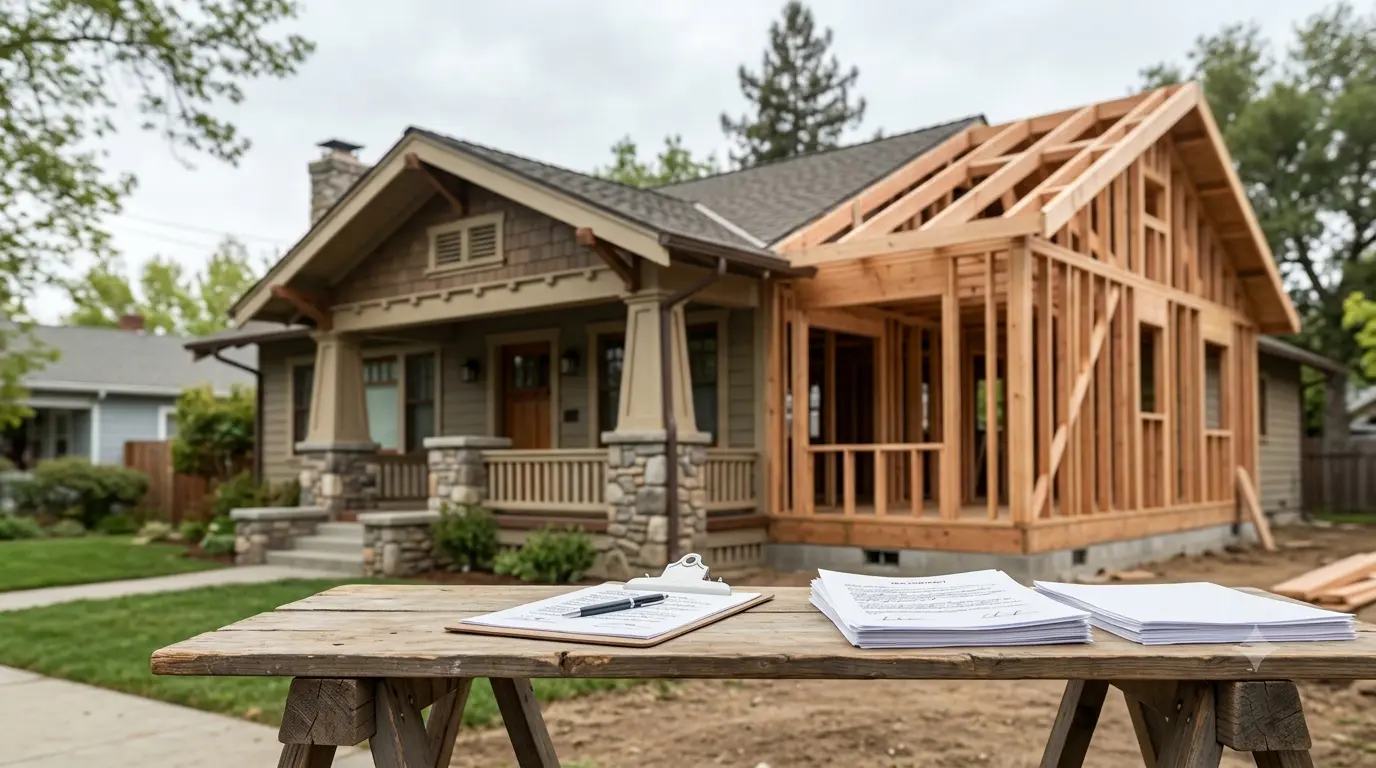
You've planned the budget, lined up the financing, and picked your contractor. There's one call most homeowners never think to make before the work starts: the one to their insurance agent.
It feels like a formality. It isn't — especially not in California right now. A major remodel changes what your home is worth, what it would cost to rebuild, and what risks it faces while walls are open and materials are stacked in the driveway. If your policy doesn't keep up, you can end up with denied claims during construction or a badly underinsured home after it. And in today's California insurance market — where hundreds of thousands of policies have been dropped since 2021 and replacing coverage is harder than it's been in decades — protecting the policy you have is worth a short phone call.
Here's what your insurance does and doesn't do during a remodel, and the five checks to run before demolition day.
First, the part that surprises people: homeowners insurance never pays for the remodel itself. It's not a home-improvement fund. What it does is protect your home against sudden, accidental damage — fire, wind, certain water damage — and that protection generally continues while a renovation is underway (Liberty Mutual).
So if a fire breaks out mid-project, the fire damage is typically covered. But there are firm limits worth knowing in advance:
For small cosmetic projects — paint, fixtures, flooring — you generally don't need to call anyone. For a major remodel or addition, you do, and before work begins, not after. Two reasons:
Claims can be denied over surprises. Insurers price your policy on your home's risk profile. A major construction project changes that profile, and insurers can deny claims — or in serious cases cancel a policy — when the home they're covering has quietly changed underneath them. Getting your insurer's sign-off in writing before the project starts closes that door.
Some policies require it. Many policies have language requiring you to notify the company when improvements increase your home's replacement cost beyond a certain amount. Your agent can tell you in two minutes whether yours does.
The best time to make this call is when your plans are final but before construction begins — your agent can walk through what changes, what it costs, and whether you need anything extra for the construction period itself (Bankrate).
Living through a major remodel is hard, and many Bay Area families rent elsewhere for the loud months. Here's the trap: most homeowners policies limit or void coverage if the home sits unoccupied for too long — commonly somewhere in the 30-to-60-day range. If your home is broken into or damaged while you're living across town, a vacancy clause can sink the claim.
If your remodel means moving out, tell your agent how long, and get the answer in writing. Depending on the insurer, the fix might be a simple note on your file, a vacancy endorsement, or short-term additional coverage. What matters is that it's settled before you hand over the keys — this is a two-minute conversation before the project and a very expensive one after a loss.
Before any work starts, ask your contractor for proof of two policies, and actually look at the paperwork:
Any established contractor will hand over current certificates without hesitation — take a photo for your records, and do the same for any subcontractors. (This is one of the checks in our guide to comparing contractor proposals like a professional — the cheapest bid sometimes gets cheap by skipping exactly these policies.)
For most professionally built remodels, your existing policy plus your contractor's insurance covers the reasonable risks. For bigger projects, ask your agent about two gap-fillers:
Neither of these is automatic, and neither is expensive relative to a six-figure project. The point isn't to buy everything — it's to make the decision on purpose instead of finding the gap after something goes wrong.
Here's the check most homeowners skip, and it's the costliest to skip in the Bay Area. Your dwelling coverage — the amount your insurer would pay to rebuild your home — was set based on your home before the remodel. Add square footage, a new kitchen, or high-end finishes, and your rebuild cost just went up. If you don't raise your coverage to match, you're underinsured: after a serious loss, the payout rebuilds the old house, not the one you just invested in (AAA).
This matters doubly in California right now. The state's insurance market is still recovering from years of wildfire losses — the California Department of Insurance rolled out nine new consumer-protection laws in January 2026 to help stabilize it — and many homeowners can't easily shop their way to better coverage the way they could a few years ago. That makes the policy you have more valuable, and keeping it accurate more important. When the project wraps:
Yes, better coverage on a more valuable home may mean a somewhat higher premium. That's not a reason to skip the call — it's the cost of actually protecting the money you just put into the house. An upgraded home insured like the old one is protection theater.
Before construction: call your agent with the final plans, settle the vacancy question if you're moving out, and photograph your contractor's liability and workers' comp certificates. During: know that covered disasters are still covered, but workmanship never is. After: update your dwelling coverage so the policy protects the home that exists now — and keep every receipt.
A remodel should leave you with a better home and intact protection. At Arch General Construction, we carry full liability and workers' compensation coverage on every job, provide certificates before work begins, and build project documentation homeowners can hand straight to their insurance agent. If you're planning a remodel or addition and want a contractor who makes this part easy, we'd be glad to talk.
Schedule a consultation with Arch General Construction →
This article is general information, not insurance or legal advice. Policies differ significantly in their terms, notification requirements, and exclusions. Confirm your specific coverage with your insurance agent or the California Department of Insurance before relying on it.

We're here to help you build your future. Whether you're ready to start your project or just have a few questions, our team is ready to assist. Contact us today to schedule a consultation or request more information.
Book a Consultation